

Joint disease is one of the most common and underdiagnosed conditions in dogs. Estimates suggest that osteoarthritis affects roughly 20% of dogs over one year of age — and the figure climbs significantly in large breeds and senior animals. Yet many owners only recognize the problem once their dog is reluctant to climb stairs, struggles to rise after rest, or loses interest in activities they once loved.
Hip and joint supplements have become one of the most widely used tools in canine preventive care and mobility management. This guide explains the biology behind joint deterioration, breaks down the evidence on each major ingredient category, and outlines how to use these products effectively as part of a broader care plan.
Understanding Canine Joint Disease
Dog joints are complex structures where two or more bones meet. Healthy joints are cushioned by cartilage — a firm but flexible tissue that absorbs impact and allows smooth, low-friction movement. The joint space is filled with synovial fluid, which lubricates the surfaces and delivers nutrients to cartilage cells.
Cartilage has no blood supply of its own and very limited capacity to repair itself once damaged. When cartilage begins to break down — through age, repetitive stress, genetic predisposition, or injury — the result is progressive joint disease. Bone begins to contact bone, inflammation sets in, and the dog experiences stiffness, discomfort, and reduced range of motion.
The most common forms of canine joint disease include:
Osteoarthritis (degenerative joint disease): The most prevalent joint condition in dogs, caused by the gradual breakdown of cartilage over time. It is most common in older dogs and larger breeds.
Hip dysplasia: A developmental condition in which the hip joint does not form properly, leading to joint laxity and accelerated cartilage wear. It is especially common in breeds such as German Shepherds, Golden Retrievers, Labrador Retrievers, and Rottweilers.
Elbow dysplasia: A group of developmental conditions affecting the elbow joint, common in large and giant breeds.
Inflammatory joint disease: Less common than degenerative joint disease, but possible in dogs with autoimmune conditions or certain infections.
Hip and joint supplements do not treat the underlying structural abnormalities in any of these conditions. What they may do — particularly with consistent, long-term use — is support the metabolic environment within the joint, slow the pace of cartilage degradation, reduce inflammation, and improve comfort and mobility.
Key Ingredients and the Evidence Behind Them
Glucosamine
Glucosamine is an amino sugar and a structural building block of cartilage and synovial fluid. Supplemental glucosamine is typically derived from shellfish chitin or produced synthetically.
In the joint, glucosamine is thought to stimulate chondrocytes — the cells responsible for producing cartilage — and support the synthesis of glycosaminoglycans, the long-chain molecules that give cartilage its ability to absorb and distribute load.
The clinical evidence is mixed. A randomized, double-blind trial published in the Journal of the American Veterinary Medical Association found that dogs treated with glucosamine and chondroitin showed statistically significant improvements in pain, weight-bearing, and overall condition severity by day 70, performing comparably to the prescription NSAID carprofen. However, a 2022 systematic review of nutraceuticals in canines concluded that the majority of studies showed no significant effect on joint health when glucosamine was studied in isolation.
The practical takeaway: glucosamine is safe, widely used, and may provide meaningful support in some dogs — particularly those with moderate joint disease or those used as part of a combination formula. It is not a fast-acting pain reliever and should not be evaluated until it has been used daily for at least six to eight weeks.
Chondroitin Sulfate
Chondroitin is a naturally occurring component of cartilage matrix. It functions by attracting water molecules into cartilage tissue, which improves elasticity and the ability to resist compression. Chondroitin also inhibits enzymes that contribute to cartilage breakdown — including matrix metalloproteinases — offering a degree of protection against progressive joint tissue loss.
Chondroitin is almost always used in combination with glucosamine. The two compounds appear to work synergistically: research in both human and veterinary medicine suggests that the combination produces better outcomes than either ingredient alone. Typical effective ratios in canine formulas are approximately 4:1 to 5:1 glucosamine to chondroitin by weight.
MSM (Methylsulfonylmethane)
MSM is an organosulfur compound found in small amounts in foods and produced in the body. Sulfur is an essential element in the synthesis of collagen and other connective tissue proteins, and MSM is used in joint formulas as a source of bioavailable sulfur.
MSM is also proposed to have anti-inflammatory and antioxidant properties. Controlled veterinary trials specifically examining MSM in isolation are limited, but it is frequently included in combination formulas alongside glucosamine and chondroitin where its contribution appears to be additive. It is generally well tolerated at recommended doses.
Omega-3 Fatty Acids (EPA and DHA)
Omega-3 fatty acids — particularly eicosapentaenoic acid (EPA) and docosahexaenoic acid (DHA) derived from cold-water fish oil or marine algae — have among the strongest evidence bases of any ingredient in the canine joint supplement category.
EPA and DHA act as natural anti-inflammatory agents by competitively inhibiting the production of pro-inflammatory prostaglandins and leukotrienes. In dogs with osteoarthritis, omega-3 supplementation has been associated with reduced joint pain scores, improved weight-bearing, and greater willingness to engage in physical activity. Their benefits extend beyond joint health to include cardiovascular, cognitive, and skin health.
For joint support specifically, fish oil is often one of the most evidence-supported additions to a dog’s diet — whether through a dedicated supplement or food sources.
Green-Lipped Mussel (Perna canaliculus)
Green-lipped mussel is a shellfish native to New Zealand and one of the more thoroughly studied marine ingredients in veterinary joint care. It contains a broad spectrum of nutrients relevant to joint health: omega-3 fatty acids including a unique form called ETA (eicosatetraenoic acid), glycosaminoglycans (including glucosamine and chondroitin), vitamins, and minerals.
Clinical trials in dogs have demonstrated statistically significant improvements in mobility and clinical signs of osteoarthritis with green-lipped mussel supplementation. A meta-analysis of available studies reported moderate-to-large effect sizes, making it one of the more consistently supported ingredients in this category. Green-lipped mussel is particularly appealing because it delivers multiple active components in a naturally occurring matrix, which may improve bioavailability compared to isolated synthetic compounds.
Hyaluronic Acid
Hyaluronic acid is a major component of synovial fluid — the lubricant that fills joint spaces and reduces friction between cartilage surfaces. It also contributes to the viscoelastic properties of the joint, allowing it to absorb impact under load.
Oral supplementation with hyaluronic acid has been studied in humans and horses with generally positive results. Veterinary data in dogs is more limited, but hyaluronic acid is included in many quality formulas because of its well-established role in joint biology. It is particularly relevant for dogs with reduced synovial fluid viscosity, which is a common feature of osteoarthritis.
UC-II (Undenatured Type II Collagen)
UC-II is a specific form of type II collagen derived from chicken sternum cartilage. Unlike hydrolyzed collagen, which is broken down into amino acids during processing, UC-II retains its native three-dimensional structure. This is important because it works through a different mechanism than most joint supplements — a process called oral tolerance.
When UC-II is consumed, it interacts with immune cells in the gut-associated lymphoid tissue. These cells are trained not to attack native type II collagen (as occurs in certain autoimmune joint conditions), which reduces the inflammatory response directed at cartilage. Clinical trials in dogs have shown that UC-II at relatively low doses (10 mg/day) improved mobility scores compared to placebo, and in some studies outperformed glucosamine and chondroitin combinations at standard doses. UC-II represents one of the more promising newer ingredients in canine joint care.
Boswellia Serrata
Boswellia, also known as Indian frankincense, contains boswellic acids — compounds that inhibit specific inflammatory enzymes (particularly 5-lipoxygenase) involved in joint inflammation. It is a botanical anti-inflammatory with a longer history of use in traditional medicine and growing evidence in veterinary applications.
Clinical studies in dogs have shown that Boswellia extract can reduce signs of osteoarthritis, including lameness and joint stiffness, often within four to six weeks of supplementation. It is frequently paired with omega-3s, glucosamine, and other ingredients in comprehensive joint formulas.
Turmeric and Curcumin
Curcumin, the primary active compound in turmeric root, is a well-studied natural anti-inflammatory with antioxidant properties. It inhibits multiple inflammatory pathways, including NF-κB, and has been shown to reduce oxidative stress in joint tissues.
Standard curcumin has poor bioavailability — it is rapidly metabolized and poorly absorbed in its native form. Formulas using enhanced bioavailability curcumin (such as curcumin phytosome, which binds curcumin to phosphatidylcholine, or piperine-enhanced forms) are significantly more effective. When evaluating a joint supplement that includes curcumin, check whether the label specifies the form used.
Signs Your Dog May Need Joint Support
Joint disease often develops gradually and can be difficult to recognize in its early stages. Dogs are instinctively inclined to mask pain, which means owners frequently underestimate the level of discomfort their pet is experiencing.
Signs that may indicate developing joint issues include:
- Slowing down on walks or refusing to continue
- Stiffness after rest, particularly in the morning or after sleeping
- Difficulty rising from a lying position
- Reluctance to jump into a car, onto furniture, or up stairs
- Visible lameness or favoring one leg
- Changes in gait — a shorter stride, altered weight distribution, or a “bunny-hopping” movement in the rear legs
- Behavioral changes such as irritability, withdrawal, or loss of interest in play
- Licking, chewing, or paying unusual attention to specific joints
- Muscle loss over the hindquarters or shoulder area
Certain dogs are at elevated risk and may benefit from preventive supplementation before symptoms appear: large and giant breeds, overweight dogs, highly active working or sporting dogs, dogs with known genetic predisposition to hip or elbow dysplasia, and dogs over seven years of age.
How to Use Hip and Joint Supplements Effectively
Start Early for At-Risk Dogs
Joint supplements are not a cure for structural joint disease. Their greatest value lies in supporting cartilage health before significant degradation occurs. For breeds known to be at genetic risk — or for dogs showing early, mild signs of joint discomfort — starting supplementation in middle age rather than waiting for advanced disease produces better long-term outcomes.
Commit to Daily Use
The active ingredients in joint supplements work cumulatively. Most require consistent daily administration for four to eight weeks before observable changes in mobility or comfort become apparent. The most common reason owners conclude that a supplement “didn’t work” is premature discontinuation.
Follow Weight-Based Dosing
Correct dosing is critical. Many supplements are underdosed — meaning the amount of active ingredient per serving is too low to produce a meaningful effect, even when the label lists the right ingredients. Typical evidence-based dosing targets for dogs are 20–25 mg/kg of glucosamine and 5–10 mg/kg of chondroitin per day. Verify that the formula you choose meets these ranges based on your dog’s weight.
Evaluate Over a Defined Trial Period
Set a specific evaluation window — typically eight weeks — and assess your dog’s mobility, activity level, ease of rising, and overall demeanor before and after. If no change is observed after a full trial period with correct dosing, consult your veterinarian to reassess the treatment approach.
Use as Part of a Broader Care Plan
Supplements are most effective as one component of a comprehensive joint care strategy. Weight management is often the single most impactful intervention available for dogs with joint disease — reducing even 10–15% of body weight can meaningfully decrease joint load. Moderate, low-impact exercise (swimming, controlled leash walks) helps maintain muscle mass that supports and stabilizes joints. Orthopedic bedding reduces pressure on joints during rest. Your veterinarian may also recommend physical therapy, pain medication, or in some cases surgical evaluation.
Supplement Forms: Powder, Chews, Tablets, and Liquids
Hip and joint supplements are available in several delivery formats, each with practical trade-offs.
Powder: Typically sprinkled over food. Offers flexible dosing, no added ingredients for palatability, and easy administration. Tends to be cost-effective per dose and straightforward to adjust for different body weights.
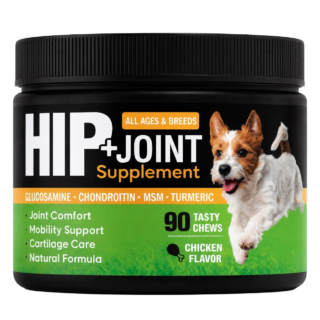
Soft chews: Highly palatable and easy to give as a treat. Often contain added flavoring agents, binding ingredients, and sometimes sugars or starches that may be a consideration for dogs with diabetes or weight management needs. Check the ingredient list carefully.
Capsules and tablets: Allow for precise dosing and tend to have fewer filler ingredients. Some dogs accept them wrapped in food; others require disguising.
Liquid: Convenient for mixing into food and may have better palatability for some dogs. Shelf life and stability of certain ingredients (omega-3 fatty acids in particular) can be a concern with liquid forms.
Regardless of format, the ingredient quality, dosing accuracy, and manufacturing standards matter more than the delivery vehicle.
What to Look for When Choosing a Product
- Transparent labeling: Each active ingredient should be listed with its quantity per serving, not hidden inside a proprietary blend.
- Appropriate dosing: Verify that the amounts per serving match evidence-based targets based on your dog’s weight.
- Third-party testing: Look for products manufactured in certified facilities with independent verification of ingredient levels and purity.
- Veterinary formulation: Products developed with veterinary or nutritional expertise tend to have better-supported formulas.
- Absence of unnecessary additives: Artificial colors, artificial flavors, and low-quality fillers are red flags in any supplement category.
Avoid products that make exaggerated claims about immediate pain relief or guaranteed results. Joint supplements are supportive tools, not pharmaceuticals — and any product marketed as a cure for arthritis should be treated with skepticism.
When to Consult a Veterinarian
Hip and joint supplements are appropriate for general preventive care and mild-to-moderate joint support. They are not a substitute for veterinary evaluation in the following situations:
- Sudden onset lameness or significant worsening of existing symptoms
- Visible joint swelling, heat, or pain on palpation
- Suspected injury following trauma or overexertion
- Advanced arthritis with significant impact on quality of life
- Dogs that are not responding to a full trial of supplementation
Veterinary diagnostics, including orthopedic examination and radiographs, can clarify the nature and extent of joint disease and determine whether prescription interventions — such as NSAIDs, injectable joint support (Adequan), or surgical procedures — are indicated.
Final Thoughts
Hip and joint disease is a common, progressive condition that affects dogs across breeds, sizes, and ages — but it does not have to mean a diminished quality of life. The right supplement, chosen based on ingredient quality and appropriate dosing, used consistently and in combination with weight management and appropriate exercise, can meaningfully support your dog’s comfort and mobility over the long term.
Start early, stay consistent, and work with your veterinarian to build a care plan that keeps your dog moving well into their senior years.

Leave a Reply